
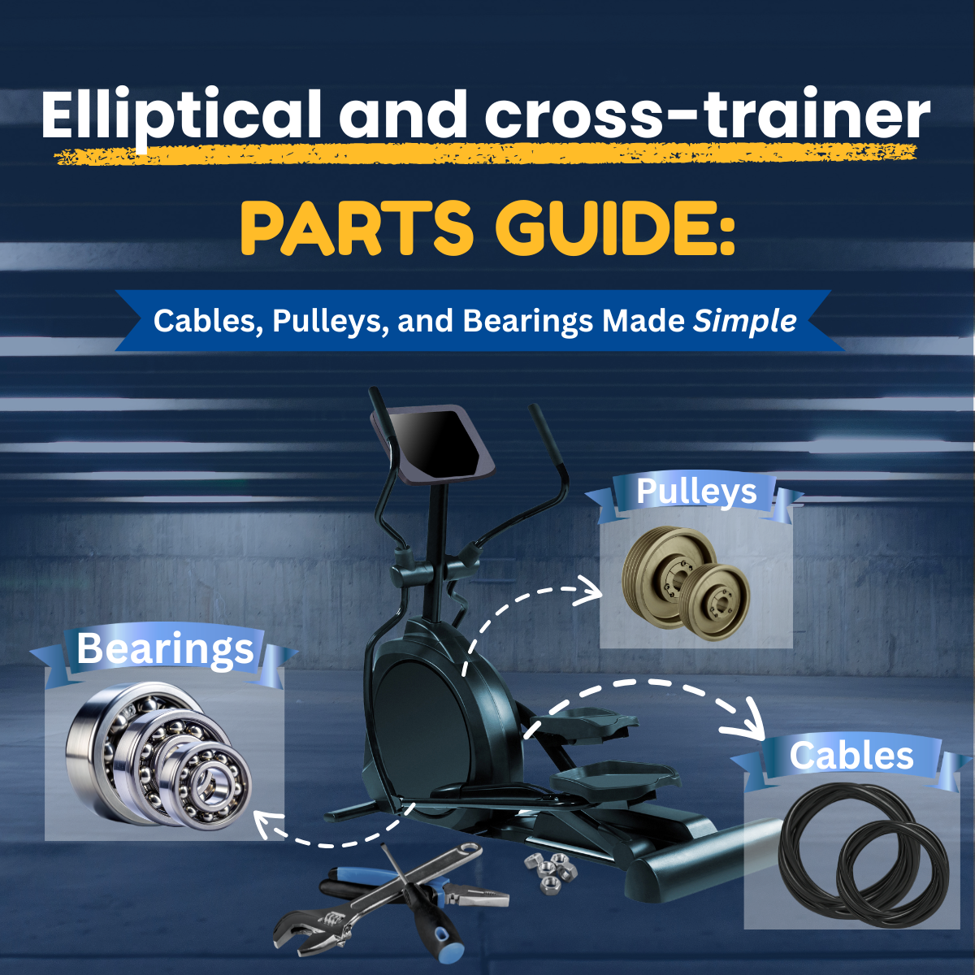
Elliptical and Cross-Trainer Parts Guide: Cables, Pulleys, Bearings
Squeaks, side play in the arms, a rough or "gravelly" stride, and resistance that fades or surges are classic signs your elliptical or cross-trainer has wear in key moving parts. The good news: these symptoms typically map to a short list of service items you can identify and replace with basic tools.
This guide shows you how to connect symptoms to likely parts, find your exact model and part numbers, check dimensions with exploded diagrams, and order with confidence. Along the way, you will see practical cautions about installation and returns, plus brand examples from Precor, Life Fitness, Cybex, NordicTrack, and Matrix.
If you already know your model or manufacturer part number, you can search directly by model or MPN or open Live Chat for quick help.
Fast Symptom-to-Part Mapping
Start with what you hear and feel. Then inspect the matching parts.
- Squeaks or chirps underfoot: Look at roller wheels, track rails, and pivot bushings or bearings. Dry rails or flat-spotted wheels squeal; worn bushings squeak at each stroke.
- Side-to-side play in moving arms: Check upper and lower pivot bearings or bushings, shoulder bolts, and spacers. Elongated bushings and ovalized bores create play.
- Rough, crunchy stride: Inspect sealed bearings at crank and main pivots, rear idler pulley bearings, and roller wheels. A failing 6000-series sealed bearing often feels gritty by hand.
- Slipping or pulsing resistance: Examine the drive belt and idler pulley alignment, then the alternator or eddy current brake if equipped. Glazed or stretched belts slip, and a misaligned idler pulley can cause surging.
- Cable snap-back or lag on strength stations within cross-trainers: Inspect the cable jacket for cracks, frayed strands near end fittings, and pulley groove wear.
Common replacements on ellipticals and cross-trainers include pivot bushings or bearings, idler pulleys, drive belts, roller wheels, and cable assemblies.
Find Your Exact Model Label First
Accuracy starts with the model and serial label on your machine. Typical locations:
- Rear frame upright or lower front frame crossmember
- Under the left or right shroud near the crank or flywheel
- Inside the rear access cover or under a foot rail
- For home brands like NordicTrack or ProForm, look under the front plastic motor or flywheel cover area
Write down brand, model, and serial. On commercial units such as Precor, Life Fitness, Cybex, and Matrix, the serial is essential because running changes can affect bearing sizes, pulley offsets, and cable lengths.
Next, use model number lookup or a manufacturer part number if you have it. Most equipment pages include exploded diagrams and parts lists to visually confirm components and dimensions.
Confirm Sizes the Right Way
When a diagram points to a candidate part, verify key dimensions on your existing component before you order.
- Pulleys: Measure outer diameter (OD), bore or inner diameter (ID), and width of the groove. Note whether the pulley is crowned, flat, or V-grooved. Many idler pulleys include a pressed bearing, so also confirm the bearing series if listed.
- Bearings: The 6000 bearing series is common. Example notation 6203-2RS indicates a 6203 size with rubber seals. Match the series and sealing. If you remove a bearing, read the numbers stamped on its shield or seal.
- Bushings: Measure ID, OD, and overall length, plus whether it is flanged. Bronze and nylon bushings wear differently; replace like for like unless the manufacturer specifies an update.
- Cables: Measure the exposed cable length from bearing point to bearing point, the full jacket length, and identify each end fitting type. A slight length mismatch can cause binding or slack.
Exploded diagrams help confirm the exact revision of parts used on your serial range.
Installation Tips and Cautions
A few careful steps prevent repeat failures and protect return eligibility.
- Disconnect power on units with electronics, and remove batteries from consoles where applicable.
- Photograph assemblies before disassembly so you can re-create spacer and washer stacks.
- Replace in pairs where practical. For example, change both pivot bushings on the same arm to keep wear even.
- Do not over-tighten shoulder bolts through bushings. Tighten to spec and rely on the bushing to rotate, not the bolt.
- Align idler pulleys and set proper belt tension to avoid edge wear and noise.
- Clean rails and install new roller wheels on a clean, smooth track. Debris will quickly damage a new wheel.
- Cables: Inspect all pulleys for chips or sharp edges before installing a new cable. A damaged pulley will cut a fresh cable quickly.
Note on returns: items sold by the foot and cut-to-length components are typically non-returnable once cut. Installed or used parts may also be non-returnable. Check the item page for product-specific terms before you order.
Brand Examples and Common Wear Items
- Precor and Life Fitness commercial ellipticals: main pivot bearings and roller wheels are high-wear items, especially in heavy-use settings. Idler pulleys with sealed bearings often quiet drive noise when replaced with the belt.
- Cybex and Matrix: look for bushing wear at upper arms and drive-link pivots. On some models, a small amount of play indicates bushing fatigue instead of frame issues.
- NordicTrack and ProForm home units: roller wheels, bushings, and drive belts are frequent maintenance parts. Verify serial-specific pulley widths and belt lengths, since model runs can change mid-year.
If you are unsure which revision fits, search by model or contact Live Chat with your serial number and a photo of the part.
Quick Reference for Treadmills
You asked about treadmill issues and part names. Here is a concise primer to help you cross-shop if your facility maintains both ellipticals and treadmills.
Common Problems
Belt slipping or hesitation, burning smell from friction, belt drifting left or right, console speed not matching actual speed, noisy rollers, or no start due to safety key missing. Slipping often points to a dry deck, low belt tension, or a worn drive belt.
Core Parts
Walking belt (treadbelt), deck, front and rear rollers, motor, motor controller, drive belt, speed sensor, safety key, and incline motor.
If a belt is dry, use a non-petroleum silicone lubricant recommended for most decks. For more guidance, see our treadbelt troubleshooting and lubrication resources, including treadmill belt lubricant and how to install treadmill belt instructions.
Tools and Small Hardware
For many pulley and belt jobs you will only need:
- Allen wrenches and combination wrenches sized to your hardware
- A socket set and torque wrench for shoulder bolts and crank hardware
- A bearing puller or small gear puller for stubborn press-fit pulleys or bearings
When removing a pulley, a small two-jaw gear puller is the go-to tool. Support the shaft and turn slowly to avoid bending the bracket.
FAQ: Cables, Pulleys, and Treadmills
Are all cable machines the same?
No. Cable diameters, jacket types, and end fittings vary widely by brand and model. Always match the assembly with your model diagram or measure the existing cable and ends before ordering.
How do you identify cable size?
Use calipers to measure outside cable diameter in inches or millimeters. Also note jacket OD, full jacket length, exposed cable length, and end fitting types. If the cable is labeled, record the printed spec.
What size is a gym cable?
Common fitness cable diameters include 3/16 inch, 1/4 inch, and 5 mm, but sizes vary by load rating and pulley design. Confirm against your model diagram and measure your original.
What is the difference between 1x19 and 7x7 cable?
These are strand constructions. 1x19 uses 19 strands in a single bundle, yielding low stretch and higher stiffness, good for straight runs. 7x7 uses seven bundles of seven strands, offering more flexibility around small pulleys with slightly more stretch.
How do you change a cable machine attachment?
Depress the carabiner gate, remove the attachment, inspect the carabiner for wear, then clip in the new handle or bar. Ensure the attachment rotates freely and the snap fully closes.
What tool removes a pulley?
A small two or three-jaw gear puller is typically used. For pulleys with retaining snap rings, use snap ring pliers first.
How do you adjust an idler pulley?
Loosen the pivot bolt slightly, turn the adjustment bolt to set belt tension and alignment, then re-tighten to spec. Track belt edge and listen for chirps to fine-tune.
How do you repair a damaged cable?
For safety, replace the cable assembly. Field repairs like clamps or crimps can fail under load. Inspect pulleys and routing before installing the new cable.
What are common treadmill problems?
Belts slipping, hesitation under load, deck friction, belt tracking off center, roller noise, speed feedback errors, and missing safety keys are the usual culprits.
What are the parts of a treadmill called?
Key assemblies include the walking belt, deck, front and rear rollers, motor, motor controller, drive belt, speed sensor, safety key, and incline motor.
When to Replace vs. Adjust
- Adjust or lubricate: minor belt slip from a dry deck, slight belt drift after a move, or a quiet squeak from a dry rail that disappears with cleaning and silicone-safe rail lube.
- Replace: bearings that feel gritty or bind, flat-spotted roller wheels, cracked or frayed cables, belts with glazing or cords showing, pulleys with chipped edges, or bushings with visible oval wear.
When replacing a drive belt, match the belt profile and length for a proper drive belt replacement. For idler noises, an idler pulley replacement often restores smooth operation.
Order with Confidence
Have your brand, model, and serial ready. Then:
- Search by model or manufacturer part number to reach your diagram.
- Open the exploded view and confirm part positions and notes by serial range.
- Verify dimensions on your removed part, especially OD/ID on pulleys, bearing series, and cable lengths and end types.
- Check stock status and any item-specific return notes. Cut-to-length items are generally non-returnable once cut.
You can start at the main catalog for fitness equipment parts and explore ellipticals, cross-trainers, and strength components. If you maintain NordicTrack or ProForm units, see brand pages for nordictrack treadmill parts and proform treadmill parts. For commercial service teams, the Life Fitness brand page is a helpful entry for life fitness parts.
Summary and Next Step
Most elliptical issues trace back to a handful of wear parts. Map the symptom to the likely component, confirm sizes on the diagram and your original part, and install with care. To move ahead, search by your model or manufacturer part number, or contact Live Chat with your serial and a quick photo so you can get the right part the first time.


